International Chemical Safety Cards
| NITROUS OXIDE | ICSC: 0067 |


Dinitrogen monoxide Hyponitrous acid anhydride Laughing gas (cylinder) N2O Molecular mass: 44.0 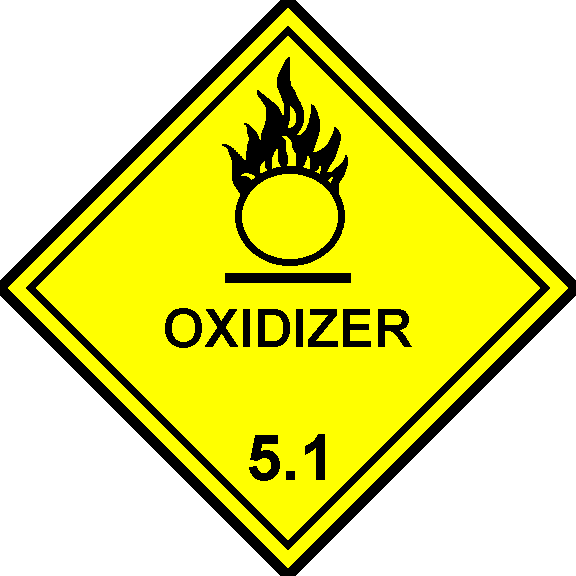
 CAS # 10024-97-2
 RTECS # QX1350000 ICSC # 0067 UN # 1070 (compressed); 2201 (refrigerated liquid) |
|
TYPES OF HAZARD/ EXPOSURE |
ACUTE HAZARDS/ SYMPTOMS |
PREVENTION |
FIRST AID/ FIRE FIGHTING |
| FIRE |
Not combustible but enhances combustion of other substances.
Many reactions may cause fire or explosion.
Gives off irritating or toxic fumes (or gases) in a fire.
|
NO open flames, NO sparks, and NO smoking.
|
Powder, water spray, foam, carbon dioxide.
|
| EXPLOSION |
Gas/air mixtures are explosive.
|
Closed system, ventilation, explosion-proof electrical equipment and lighting.
|
In case of fire: keep cylinder cool by spraying with water.
Combat fire from a sheltered position.
|
| EXPOSURE |
|
AVOID EXPOSURE OF (PREGNANT) WOMEN!
|
|
|
|
Drowsiness.
Unconsciousness.
Eurphoria.
|
Ventilation.
Local exhaust or breathing protection.
|
Fresh air, rest.
Refer for medical attention.
|
|
|
ON CONTACT WITH LIQUID: FROSTBITE.
|
Cold-insulating gloves.
|
ON FROSTBITE: rinse with plenty of water, do NOT remove clothes.
Refer for medical attention.
|
|
|
Redness.
Pain.
|
Safety goggles
or eye protection in combination with breathing protection.
|
First rinse with plenty of water for several minutes (remove contact lenses if easily possible), then take to a doctor.
|
|
|
|
Do not eat, drink, or smoke during work.
|
|
| SPILLAGE DISPOSAL | STORAGE | PACKAGING & LABELLING | ||
|
Evacuate danger area!
Consult an expert!
Ventilation.
If in liquid state:
do NOT absorb in saw-dust or other combustible absorbents.
NEVER direct water jet on liquid
(extra personal protection: self-contained breathing apparatus).
|
Fireproof if in building.
Separated from
incompatible materials (see Chemical Dangers).
Cool.
|
UN Hazard Class: 2.2 UN Subsidiary Risks: 5.1 |
||
| SEE IMPORTANT INFORMATION ON BACK | ||||
|
||||