International Chemical Safety Cards
| VINYL CHLORIDE | ICSC: 0082 |


Chloroethene Chloroethylene VCM (cylinder) C2H3Cl/H2C=CHCl Molecular mass: 62.5 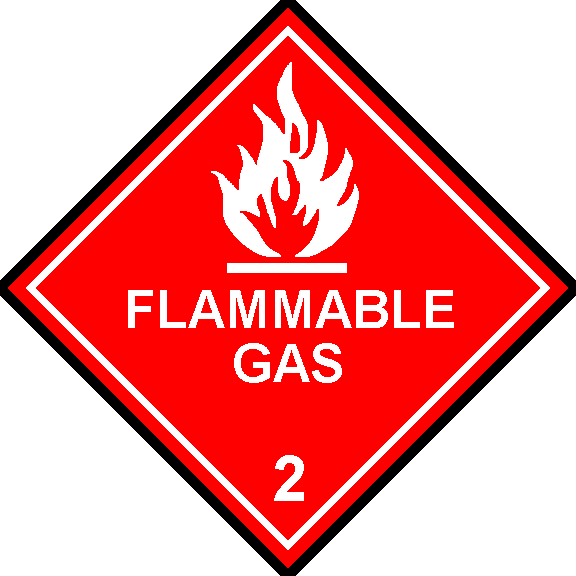 CAS # 75-01-4
RTECS # KU9625000 ICSC # 0082 UN # 1086 (inhibited) EC # 602-023-00-7 |
|
TYPES OF HAZARD/ EXPOSURE |
ACUTE HAZARDS/ SYMPTOMS |
PREVENTION |
FIRST AID/ FIRE FIGHTING |
| FIRE |
Extremely flammable.
Gives off irritating or toxic fumes (or gases) in a fire.
|
NO open flames, NO sparks, and NO smoking.
|
Shut off supply; if not possible and no risk to surroundings, let the fire burn itself out; in other cases extinguish with
powder,
carbon dioxide.
|
| EXPLOSION |
Gas/air mixtures are explosive.
Vinyl chloride monomer vapours are uninhibited and may form polymers in vents or flame arresters of storage tanks, resulting in blockage of vents.
|
Closed system, ventilation, explosion-proof electrical equipment and lighting.
Use non-sparking handtools.
|
In case of fire: keep cylinder cool by spraying with water.
Combat fire from a sheltered position.
|
| EXPOSURE |
|
AVOID ALL CONTACT!
|
|
|
|
Dizziness.
Drowsiness.
Headache.
Unconsciousness.
|
Ventilation, local exhaust, or breathing protection.
|
Fresh air, rest.
Refer for medical attention.
|
|
|
ON CONTACT WITH LIQUID: FROSTBITE.
|
Protective gloves.
Cold-insulating gloves.
Protective clothing.
|
ON FROSTBITE: rinse with plenty of water, do NOT remove clothes.
|
|
|
Redness.
Pain.
|
Safety goggles,
or eye protection in combination with breathing protection.
|
First rinse with plenty of water for several minutes (remove contact lenses if easily possible), then take to a doctor.
|
|
|
|
Do not eat, drink, or smoke during work.
Wash hands before eating.
|
|
| SPILLAGE DISPOSAL | STORAGE | PACKAGING & LABELLING | ||
|
Evacuate danger area!
Consult an expert!
Ventilation
(extra personal protection: complete protective clothing including self-contained breathing apparatus).
|
Fireproof.
Separated from incompatible materials (see Chemical Danger).
Cool.
|
F symbol T symbol R: 45-13 S: 53-9-16-44 Note: D UN Hazard Class: 2.1 |
||
| SEE IMPORTANT INFORMATION ON BACK | ||||
|
||||