International Chemical Safety Cards
| ARSENIC TRICHLORIDE | ICSC: 0221 |


Arsenic III chloride Arsenous chloride AsCl3 Molecular mass: 181.2 
 CAS # 7784-34-1
RTECS # CG1750000 ICSC # 0221 UN # 1560 EC # 033-002-00-5 |
|
TYPES OF HAZARD/ EXPOSURE |
ACUTE HAZARDS/ SYMPTOMS |
PREVENTION |
FIRST AID/ FIRE FIGHTING |
| FIRE |
Not combustible.
|
NO contact with metals.
|
In case of fire in the surroundings: all extinguishing agents allowed.
Fire fighters should wear complete protective clothing including self-contained breathing apparatus.
|
| EXPLOSION |
Risk of fire and explosion on contact with base(s), oxidants, water and metals.
|
|
Fire fighters should wear complete protective clothing including self-contained breathing apparatus.
|
| EXPOSURE |
|
AVOID ALL CONTACT!
|
IN ALL CASES CONSULT A DOCTOR!
|
|
|
Corrosive.
Cough.
Laboured breathing
(see Ingestion).
|
Closed system and ventilation.
|
Fresh air, rest.
Half-upright position.
Refer for medical attention.
|
|
|
Corrosive.
MAY BE ABSORBED!
Redness.
Pain.
|
Protective gloves.
Protective clothing.
|
Remove contaminated clothes.
Rinse skin with plenty of water or shower.
Refer for medical attention.
|
|
|
Corrosive.
Pain.
Severe deep burns.
|
Face shield
or eye protection in combination with breathing protection.
|
First rinse with plenty of water for several minutes (remove contact lenses if easily possible), then take to a doctor.
|
|
|
Corrosive.
Abdominal pain.
Burning sensation.
Diarrhoea.
Vomiting.
Collapse.
|
Do not eat, drink, or smoke during work.
Wash hands before eating.
|
Rinse mouth.
Do NOT induce vomiting.
Refer for medical attention.
|
| SPILLAGE DISPOSAL | STORAGE | PACKAGING & LABELLING | ||
|
Evacuate danger area!
Consult an expert!
Collect leaking and spilled liquid in sealable plastic containers as far as possible.
Absorb remaining liquid in dry sand or inert absorbent and remove to safe place.
Then remove to safe place
(extra personal protection: complete protective clothing including self-contained breathing apparatus).
|
Separated from
bases, oxidants, food and feedstuffs.
Cool.
Dry.
Keep in the dark.
Ventilation along the floor.
|
Unbreakable packaging; put breakable packaging into closed unbreakable container.
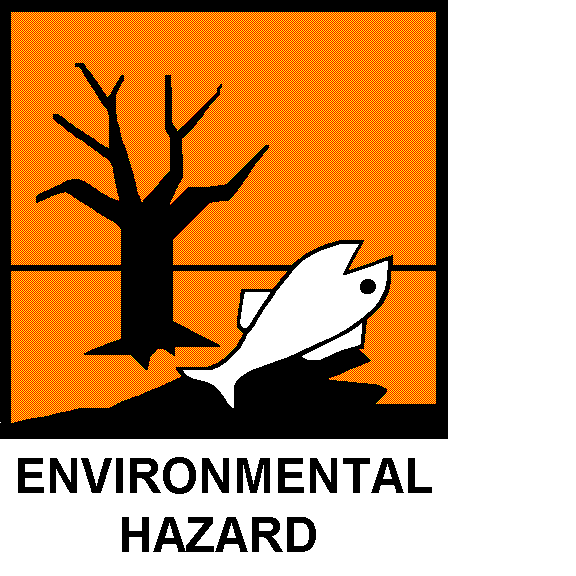
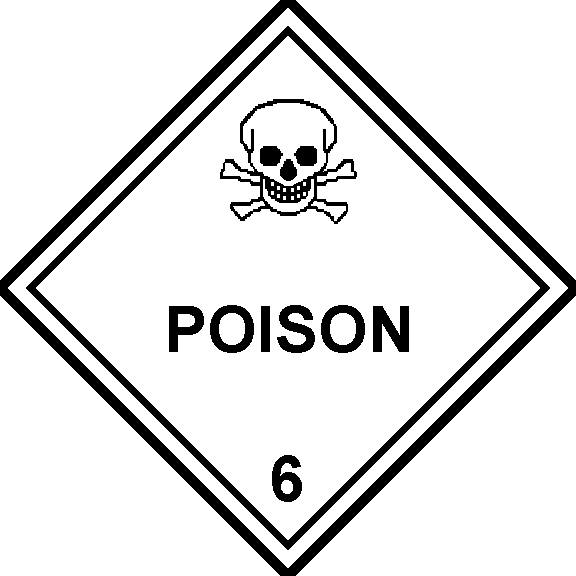
T symbol R: 23-25 S: 1/2-20/21-28-44 Note: A UN Hazard Class: 6.1 UN Packing Group: I Marine pollutant. UN pack method: M |
||
| SEE IMPORTANT INFORMATION ON BACK | ||||
|
||||