International Chemical Safety Cards
| METHYLENE BISPHENYL ISOCYANATE | ICSC: 0298 |


MDI Diphenylmethane-4.4'-diisocyanate bis(1,4-Isocyanatophenyl)methane C15H10N2O2/OCNC6H4CH2C6H4NCO Molecular mass: 250.3 
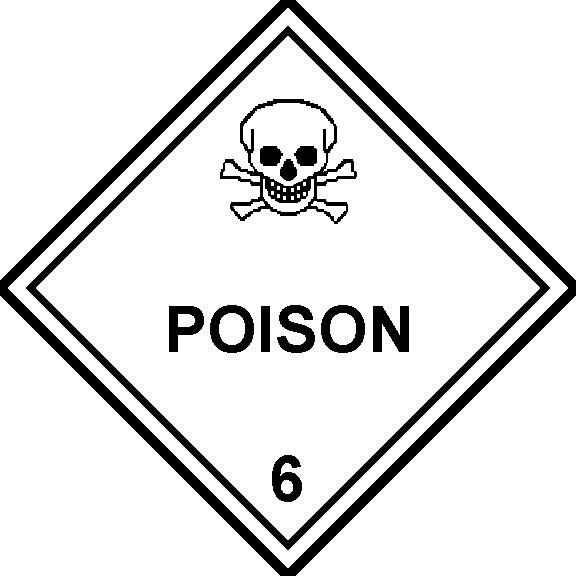 CAS # 101-68-8
 RTECS # NQ9350000 ICSC # 0298 UN # 2489 EC # 615-005-01-6 |
|
TYPES OF HAZARD/ EXPOSURE |
ACUTE HAZARDS/ SYMPTOMS |
PREVENTION |
FIRST AID/ FIRE FIGHTING |
| FIRE |
Combustible.
Gives off irritating or toxic fumes (or gases) in a fire.
|
NO open flames.
|
Powder, carbon dioxide.
|
| EXPLOSION |
|
|
|
| EXPOSURE |
|
AVOID ALL CONTACT!
|
IN ALL CASES CONSULT A DOCTOR!
|
|
|
Headache.
Nausea.
Shortness of breath.
Sore throat.
|
Ventilation (not if powder).
Local exhaust or breathing protection.
|
Fresh air, rest.
Half-upright position.
Artificial respiration if indicated.
Refer for medical attention.
|
|
|
Redness.
|
Protective gloves.
Protective clothing.
|
Remove contaminated clothes.
Rinse skin with plenty of water or shower.
Refer for medical attention.
|
|
|
Pain.
May cause corneal damage.
|
Safety goggles
or face shield.
|
First rinse with plenty of water for several minutes (remove contact lenses if easily possible), then take to a doctor.
|
|
|
|
Do not eat, drink, or smoke during work.
|
Rinse mouth.
Do NOT induce vomiting.
Refer for medical attention.
|
| SPILLAGE DISPOSAL | STORAGE | PACKAGING & LABELLING | ||
|
Evacuate danger area!
Consult an expert!
Sweep spilled substance into containers; if appropriate, moisten first to prevent dusting.
Carefully collect remainder,
then remove to safe place
(extra personal protection: self-contained breathing apparatus).
|
Separated from incompatible materials (see Chemical Dangers),
food and feedstuffs.
Cool.
Dry.
Keep in the dark.
|
Unbreakable packaging; put breakable packaging into closed unbreakable container.
Do not transport with food and feedstuffs.
Xn symbol R: 20-36/37/38-42 S: (2-)26-28-38-45 Note: C UN Hazard Class: 6.1 UN Packing Group: III |
||
| SEE IMPORTANT INFORMATION ON BACK | ||||
|
||||