International Chemical Safety Cards

METHYL NAPHTHALENE ICSC: 0510

METHYL NAPHTHALENE
A mixture of 1- and 2-Methyl naphthalenes
Naphthalene, methyl
C11H10
Molecular mass: 142.2
CAS # 1321-94-4
RTECS # QJ9625000
ICSC # 0510
TYPES OF
HAZARD/
EXPOSURE
ACUTE HAZARDS/
SYMPTOMS
PREVENTION FIRST AID/
FIRE FIGHTING
FIRE Combustible.
NO open flames.
Powder, alcohol-resistant foam, water in large amounts, carbon dioxide.
EXPLOSION


EXPOSURE


  • INHALATION
  • Cough.
    Ventilation.
    Fresh air, rest.
  • SKIN
  • Redness.
    Protective gloves.
    Remove contaminated clothes. Rinse and then wash skin with water and soap.
  • EYES
  • Redness.
    Safety goggles.
    First rinse with plenty of water for several minutes (remove contact lenses if easily possible), then take to a doctor.
  • INGESTION
  • No data in humans.
    Do not eat, drink, or smoke during work.
    Rinse mouth. Give a slurry of activated charcoal in water to drink. Induce vomiting (ONLY IN CONSCIOUS PERSONS!). Rest. Refer for medical attention.
    SPILLAGE DISPOSAL STORAGE PACKAGING & LABELLING
    Sweep spilled substance into containers. Carefully collect remainder, then remove to safe place. Do NOT let this chemical enter the environment.


    SEE IMPORTANT INFORMATION ON BACK
    ICSC: 0510 Prepared in the context of cooperation between the International Programme on Chemical Safety & the Commission of the European Communities © IPCS CEC 1993 No modifications to the International version have been made except to add the OSHA PELs, NIOSH RELs and IDLH values.

    International Chemical Safety Cards

    METHYL NAPHTHALENE ICSC: 0510

    I
    M
    P
    O
    R
    T
    A
    N
    T

    D
    A
    T
    A

    PHYSICAL STATE; APPEARANCE:
    COLOURLESS LIQUID CRYSTALS , WITH CHARACTERISTIC ODOUR.

    PHYSICAL DANGERS:


    CHEMICAL DANGERS:
    The substance decomposes on heating producing irritating fumes.

    OCCUPATIONAL EXPOSURE LIMITS (OELs):


    ROUTES OF EXPOSURE:
    The substance can be absorbed into the body by inhalation and by ingestion.

    INHALATION RISK:
    No indication can be given about the rate in which a harmful concentration in the air is reached on evaporation of this substance at 20°C.

    EFFECTS OF SHORT-TERM EXPOSURE:
    The substance irritates the eyes and the respiratory tract.

    EFFECTS OF LONG-TERM OR REPEATED EXPOSURE:
    PHYSICAL
    PROPERTIES
    Boiling point: 241-244°C
    Melting point: -22°C (1-methyl), 34.6°C (2-methyl)°C
    Relative density (water = 1): 1.0
    Solubility in water: None
    Flash point: 82-97°C
    Octanol/water partition coefficient as log Pow: 3.864
    ENVIRONMENTAL
    DATA
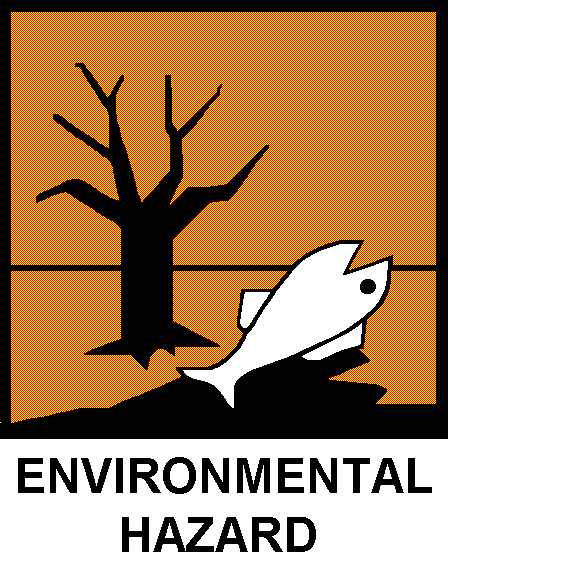
    This substance may be hazardous to the environment; special attention should be given to fish.
    NOTES
    Data are insufficiently available on the effect of this substance on human health, therefore utmost care must be taken.
    ADDITIONAL INFORMATION


    ICSC: 0510 METHYL NAPHTHALENE
    © IPCS, CEC, 1993
    IMPORTANT LEGAL NOTICE: Neither NIOSH, the CEC or the IPCS nor any person acting on behalf of NIOSH, the CEC or the IPCS is responsible for the use which might be made of this information. This card contains the collective views of the IPCS Peer Review Committee and may not reflect in all cases all the detailed requirements included in national legislation on the subject. The user should verify compliance of the cards with the relevant legislation in the country of use. The only modifications made to produce the U.S. version is inclusion of the OSHA PELs, NIOSH RELs and IDLH values.