International Chemical Safety Cards
| GUANIDINE NITRATE | ICSC: 0561 |


Guanidine mononitrate Guandidinium nitrate CH6N4O3/CH5N3.HNO3 Molecular mass: 122.1 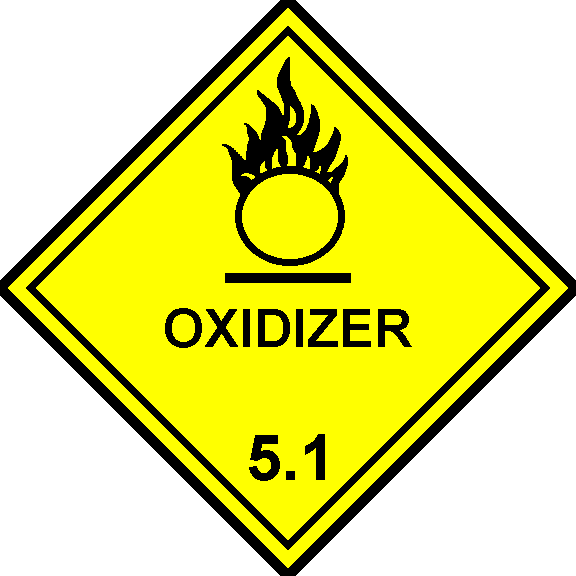 CAS # 506-93-4
 RTECS # MF4350000 ICSC # 0561 UN # 1467 |
|
TYPES OF HAZARD/ EXPOSURE |
ACUTE HAZARDS/ SYMPTOMS |
PREVENTION |
FIRST AID/ FIRE FIGHTING |
| FIRE |
Explosive.
Gives off irritating or toxic fumes (or gases) in a fire.
|
NO open flames, NO sparks, and NO smoking.
NO contact with flammable substances.
|
Water in large amounts.
|
| EXPLOSION |
Risk of fire and explosion.
|
Do NOT expose to friction or shock.
|
In case of fire: keep drums, etc., cool by spraying with water.
|
| EXPOSURE |
|
PREVENT DISPERSION OF DUST!
STRICT HYGIENE!
|
|
|
|
See Notes.
|
Local exhaust or breathing protection.
|
Fresh air, rest.
|
|
|
Pain.
Blisters.
|
Protective gloves.
|
Rinse and then wash skin with water and soap.
|
|
|
Pain.
Severe deep burns.
|
Face shield.
|
First rinse with plenty of water for several minutes (remove contact lenses if easily possible), then take to a doctor.
|
|
|
|
Do not eat, drink, or smoke during work.
|
Do NOT induce vomiting.
Rest.
Refer for medical attention.
|
| SPILLAGE DISPOSAL | STORAGE | PACKAGING & LABELLING | ||
|
Evacuate danger area and
consult an expert in case of large spill.
Do NOT wash away into sewer.
Sweep spilled substance into covered containers; if appropriate, moisten first to prevent dusting.
Do NOT absorb in saw-dust or other combustible absorbents.
|
Fireproof.
Separated from
combustible and reducing substances,
strong oxidants.
|
UN Classification. UN Hazard Class: 5.1 UN Packing Group: III |
||
| SEE IMPORTANT INFORMATION ON BACK | ||||
|
||||