International Chemical Safety Cards
| TRICHLOROSILANE | ICSC: 0591 |


Trichloromonosilane Silicochloroform Cl3HSi Molecular mass: 135.47 
 CAS # 10025-78-2
 RTECS # VV5950000 ICSC # 0591 UN # 1295 EC # 014-001-00-9 |
|
TYPES OF HAZARD/ EXPOSURE |
ACUTE HAZARDS/ SYMPTOMS |
PREVENTION |
FIRST AID/ FIRE FIGHTING |
| FIRE |
Extremely flammable.
Gives off irritating or toxic fumes (or gases) in a fire.
|
NO open flames, NO sparks, and NO smoking.
|
Water in large amounts,
foam,
powder, carbon dioxide.
|
| EXPLOSION |
Vapour/air mixtures are explosive.
|
Closed system, ventilation, explosion-proof electrical equipment and lighting.
Do NOT use compressed air for filling, discharging, or handling.
|
|
| EXPOSURE |
|
AVOID ALL CONTACT!
|
IN ALL CASES CONSULT A DOCTOR!
|
|
|
Sore throat.
Cough.
Burning sensation.
Shortness of breath.
Laboured breathing.
Symptoms may be delayed (see Notes).
|
Ventilation, local exhaust, or breathing protection.
|
Fresh air, rest.
Half-upright position.
Refer for medical attention.
|
|
|
Pain.
Redness.
Blisters.
Skin burns.
Serious frostbite.
|
Protective gloves.
Protective clothing.
|
Remove contaminated clothes.
Rinse skin with plenty of water or shower.
Refer for medical attention.
|
|
|
Pain.
Redness.
Severe deep burns.
Loss of vision.
|
Face shield,
or eye protection in combination with breathing protection.
|
First rinse with plenty of water for several minutes (remove contact lenses if easily possible), then take to a doctor.
|
|
|
Burning sensation.
Abdominal pain.
Shock or collapse.
|
Do not eat, drink, or smoke during work.
|
Rinse mouth.
Do NOT induce vomiting.
Refer for medical attention.
|
| SPILLAGE DISPOSAL | STORAGE | PACKAGING & LABELLING | ||
|
Evacuate danger area!
Consult an expert!
Ventilation.
Collect leaking and spilled liquid in sealable containers as far as possible.
Absorb remaining liquid in dry sand or inert absorbent and remove to safe place
(extra personal protection: chemical protection suit including self-contained breathing apparatus).
|
Fireproof.
Separated from
food and feedstuffs.
See Chemical Dangers.
Cool.
Dry.
Well closed.
Ventilation along the floor.
|
Do not transport with food and feedstuffs.
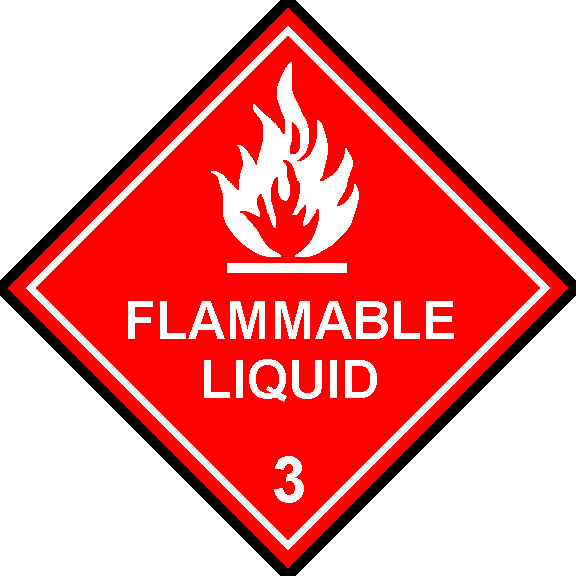
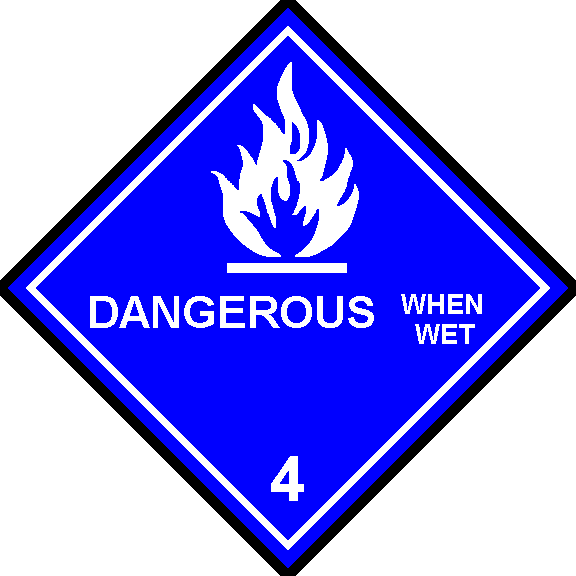
F symbol R: 15-17 S: (2-)24/25-43 UN Hazard Class: 4.3 UN Subsidiary Risks: 3 and 8 UN Packing Group: I |
||
| SEE IMPORTANT INFORMATION ON BACK | ||||
|
||||