International Chemical Safety Cards
| PERCHLORIC ACID, SODIUM SALT | ICSC: 0715 |


Sodium perchlorate Inenat NaClO4 Molecular mass: 122.4 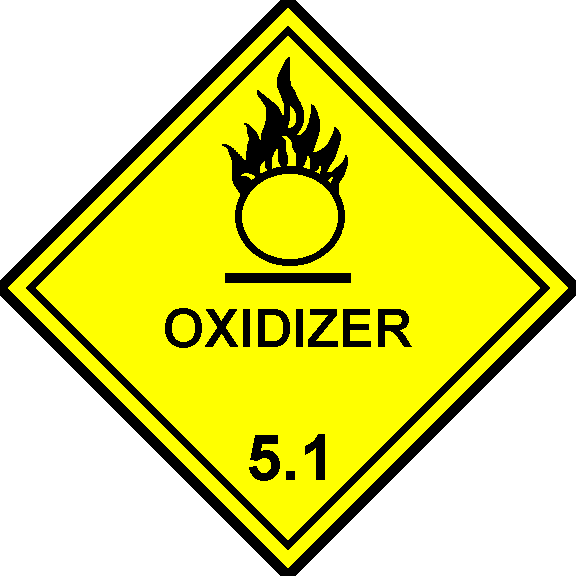 CAS # 7601-89-0
RTECS # SC9800000 ICSC # 0715 UN # 1502 EC # 017-010-00-6 |
|
TYPES OF HAZARD/ EXPOSURE |
ACUTE HAZARDS/ SYMPTOMS |
PREVENTION |
FIRST AID/ FIRE FIGHTING |
| FIRE |
Not combustible but enhances combustion of other substances.
Many reactions may cause fire or explosion.
Gives off irritating or toxic fumes (or gases) in a fire.
|
NO open flames, NO sparks, and NO smoking.
NO contact with combustible materials, metal powders.
|
Water in large amounts, water spray.
|
| EXPLOSION |
|
Do NOT expose to friction or shock.
|
In case of fire: keep drums, etc., cool by spraying with water.
Combat fire from a sheltered position.
|
| EXPOSURE |
|
PREVENT DISPERSION OF DUST!
AVOID EXPOSURE OF ADOLESCENTS AND CHILDREN!
|
|
|
|
Cough.
Sore throat.
|
Local exhaust or breathing protection.
|
Fresh air, rest.
Refer for medical attention.
|
|
|
Redness.
|
Protective gloves.
|
Remove contaminated clothes.
Rinse and then wash skin with water and soap.
|
|
|
Redness.
Pain.
|
Safety goggles
or eye protection in combination with breathing protection.
|
First rinse with plenty of water for several minutes (remove contact lenses if easily possible), then take to a doctor.
|
|
|
|
Do not eat, drink, or smoke during work.
|
Rinse mouth.
Refer for medical attention.
|
| SPILLAGE DISPOSAL | STORAGE | PACKAGING & LABELLING | ||
|
Wash away spilled liquid with plenty of water.
Sweep spilled substance into sealable containers.
Do NOT absorb in saw-dust or other combustible absorbents
(extra personal protection: P2 filter respirator for harmful particles).
|
Fireproof.
Separated from
combustible and reducing substances
(see Chemical Dangers).
Cool.
Dry.
Well closed.
|
O symbol Xn symbol R: 9-22 S: 2-13-22-27 UN Hazard Class: 5.1 UN Packing Group: II |
||
| SEE IMPORTANT INFORMATION ON BACK | ||||
|
||||