International Chemical Safety Cards
| 4-METHYLPYRIDINE | ICSC: 0803 |


4-Picoline gamma-Picoline p-Picoline C6H7N/(C5H4N)CH3 Molecular mass: 93.1 
 CAS # 108-89-4
RTECS # UT5425000 ICSC # 0803 UN # 2313 EC # 613-037-00-8 |
|
TYPES OF HAZARD/ EXPOSURE |
ACUTE HAZARDS/ SYMPTOMS |
PREVENTION |
FIRST AID/ FIRE FIGHTING |
| FIRE |
Flammable.
Gives off irritating or toxic fumes (or gases) in a fire.
|
NO open flames, NO sparks, and NO smoking.
|
Powder, alcohol-resistant foam, water spray, carbon dioxide.
|
| EXPLOSION |
Above 57°C explosive vapour/air mixtures may be formed.
|
Above 57°C use a closed system, ventilation, and explosion-proof electrical equipment.
|
In case of fire: keep drums, etc., cool by spraying with water.
|
| EXPOSURE |
|
PREVENT GENERATION OF MISTS!
|
|
|
|
Burning sensation.
Cough.
Dizziness.
Drowsiness.
Headache.
Laboured breathing.
Nausea.
Sore throat.
Unconsciousness.
Weakness.
|
Ventilation, local exhaust, or breathing protection.
|
Fresh air, rest.
Refer for medical attention.
|
|
|
MAY BE ABSORBED!
Dry skin.
Redness.
Burning sensation.
Pain.
Blisters
(further see Inhalation).
|
Protective gloves.
Protective clothing.
|
Remove contaminated clothes.
Rinse skin with plenty of water or shower.
Refer for medical attention.
|
|
|
Pain.
Blurred vision.
Severe deep burns.
|
Safety spectacles,
face shield,
or eye protection in combination with breathing protection.
|
First rinse with plenty of water for several minutes (remove contact lenses if easily possible), then take to a doctor.
|
|
|
Abdominal pain.
Burning sensation.
Diarrhoea
(further see Inhalation).
|
Do not eat, drink, or smoke during work.
|
Rinse mouth.
Do NOT induce vomiting.
Refer for medical attention.
|
| SPILLAGE DISPOSAL | STORAGE | PACKAGING & LABELLING | ||
|
Collect leaking and spilled liquid in sealable containers as far as possible.
Absorb remaining liquid in sand or inert absorbent and remove to safe place
(extra personal protection: self-contained breathing apparatus).
|
Fireproof.
Separated from
strong oxidants,
acids.
|
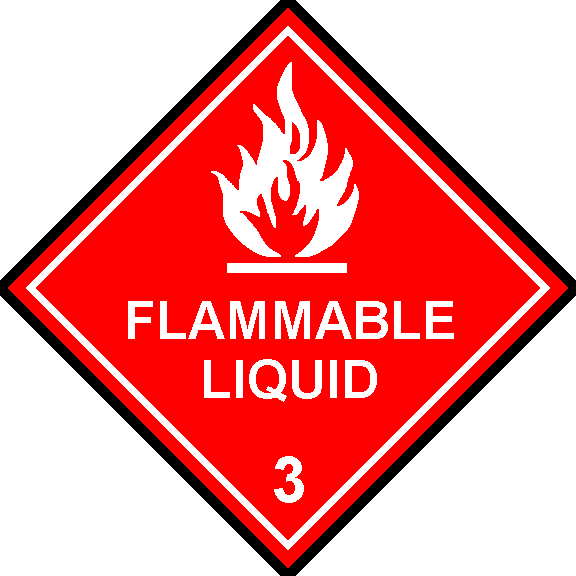
T symbol R: 10-20/22-24-36/37/38 S: 26-36-44 UN Hazard Class: 3 UN Packing Group: II Marine pollutant. |
||
| SEE IMPORTANT INFORMATION ON BACK | ||||
|
||||