International Chemical Safety Cards
| TETRYL | ICSC: 0959 |


N-methyl-N,2,4,6-tetranitroaniline Picrylnitromethylamine Nitramine C7H5N5O8 / (NO2)3C6H2N(CH3)NO2 Molecular mass: 287.15 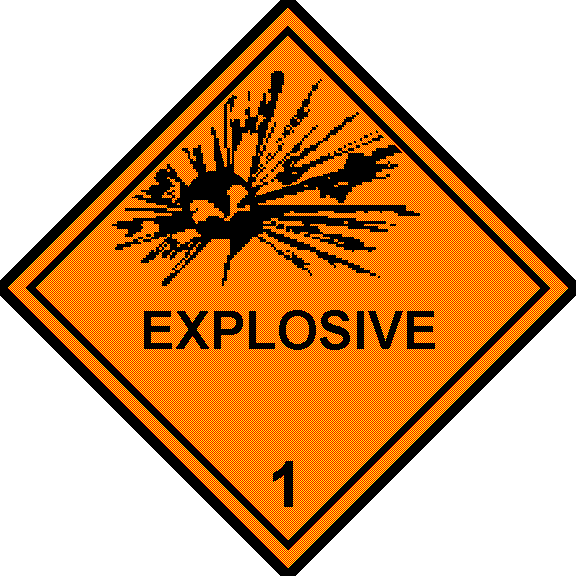 CAS # 479-45-8
RTECS # BY6300000 ICSC # 0959 UN # 0208 EC # 612-017-00-6 |
|
TYPES OF HAZARD/ EXPOSURE |
ACUTE HAZARDS/ SYMPTOMS |
PREVENTION |
FIRST AID/ FIRE FIGHTING |
| FIRE |
Gives off toxic fumes in a fire or explosion.
Explosive.
|
NO open flames, NO sparks, and NO smoking.
NO contact with hot surfaces.
|
CONSIDER EVACUATION. Water may be used on small fires. Do not attempt to extinguish large fires.
|
| EXPLOSION |
Finely dispersed particles form explosive mixtures in air.
Risk of fire and explosion when shocked or exposed to heat or flame.
|
Closed system, ventilation, explosion-proof electrical equipment and lighting.
Prevent build-up of electrostatic charges (e.g., by grounding).
Do NOT expose to friction or shock.
Prevent deposition of dust; closed system, dust explosion-proof electrical equipment and lighting.
|
In case of fire: keep drums, etc., cool by spraying with water.
Combat fire from a sheltered position.
|
| EXPOSURE |
|
PREVENT DISPERSION OF DUST!
|
|
|
|
Insomnia.
Abdominal pain.
Cough.
Diarrhoea.
Headache.
Sore throat.
Nosebleeds.
|
Local exhaust or breathing protection.
|
Fresh air, rest.
Artificial respiration if indicated.
Refer for medical attention.
|
|
|
Redness.
Yellow stains of skin and hair.
|
Protective clothing.
|
Remove contaminated clothes.
Rinse skin with plenty of water or shower.
Wear protective gloves when administering first aid.
|
|
|
Redness.
Pain.
|
Safety goggles,
or eye protection in combination with breathing protection if powder.
|
First rinse with plenty of water for several minutes (remove contact lenses if easily possible), then take to a doctor.
|
|
|
Nausea.
(see Inhalation).
|
Do not eat, drink, or smoke during work.
|
Refer for medical attention.
|
| SPILLAGE DISPOSAL | STORAGE | PACKAGING & LABELLING | ||
|
Evacuate danger area!
Consult an expert!
(extra personal protection: P3 filter respirator for toxic particles).
|
Fireproof.
Separated from
strong oxidants.
Keep in the dark.
Keep in a separate building protected from shock, under lock and key.
|
E symbol T symbol R: 2-23/24/25-33 S: (1/2-)35-45 UN Hazard Class: 1.1D |
||
| SEE IMPORTANT INFORMATION ON BACK | ||||
|
||||