International Chemical Safety Cards

TURPENTINE ICSC: 1063

Turpentine
Turpentine oil
Spirits of turpentine
C10H16 (approx)
Molecular mass: 136 (approx)
CAS # 8006-64-2
RTECS # YO8400000
ICSC # 1063
UN # 1299
EC # 650-002-00-6
TYPES OF
HAZARD/
EXPOSURE
ACUTE HAZARDS/
SYMPTOMS
PREVENTION FIRST AID/
FIRE FIGHTING
FIRE Flammable.
NO open flames, NO sparks, and NO smoking.
Powder, AFFF, foam, carbon dioxide. Fire fighters should wear complete protective clothing including self-contained breathing apparatus.
EXPLOSION Above 35°C explosive vapour/air mixtures may be formed.
Above 35°C closed system, ventilation, and explosion-proof electrical equipment. Prevent build-up of electrostatic charges (e.g., by grounding). Do NOT use compressed air for filling, discharging, or handling.
In case of fire: keep drums, etc., cool by spraying with water. Fire fighters should wear complete protective clothing including self-contained breathing apparatus.
EXPOSURE


  • INHALATION
  • Sore throat, cough, dizziness, headache, laboured breathing, nausea, unconsciousness. Symptoms may be delayed (see Notes). remember to sequence
    Ventilation, local exhaust, or breathing protection.
    Fresh air, rest, half-upright position, artificial respiration if indicated, and refer for medical attention.
  • SKIN
  • Dry skin, redness, pain.
    Protective gloves.
    Remove contaminated clothes, rinse and then wash skin with water and soap, and refer for medical attention if irritation persists.
  • EYES
  • Redness, pain.
    Safety goggles.
    First rinse with plenty of water for several minutes (remove contact lenses if easily possible), then take to a doctor.
  • INGESTION
  • Sore throat, abdominal pain, diarrhoea. remember to sequence
    Do not eat, drink, or smoke during work.
    Rinse mouth, do NOT induce vomiting, give plenty of water to drink, and refer for medical attention.
    SPILLAGE DISPOSAL STORAGE PACKAGING & LABELLING
    Collect leaking and spilled liquid in sealable containers as far as possible, absorb remaining liquid in sand or inert absorbent and remove to safe place, do NOT absorb in saw-dust or other combustible absorbents.
    Fireproof, separated from strong oxidants.

    Xn symbol
    R: 10-20/21/22
    S: 2
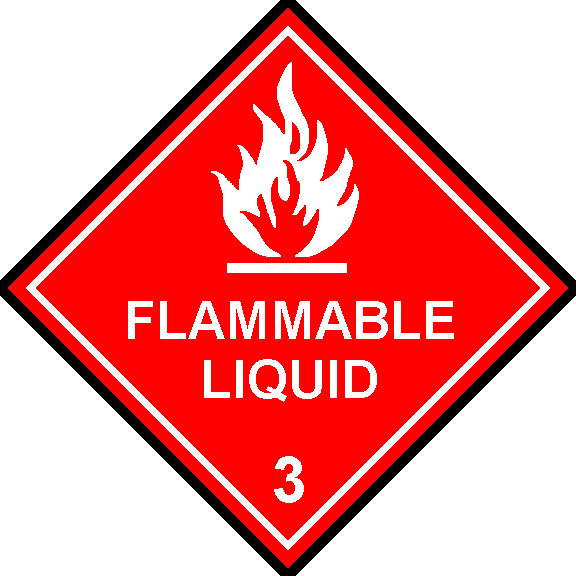
    UN Haz Class: 3
    UN Pack Group: III
    SEE IMPORTANT INFORMATION ON BACK
    ICSC: 1063 Prepared in the context of cooperation between the International Programme on Chemical Safety & the Commission of the European Communities © IPCS CEC 1990 No modifications to the International version have been made except to add the OSHA PELs, NIOSH RELs and IDLH values.

    International Chemical Safety Cards

    TURPENTINE ICSC: 1063

    I
    M
    P
    O
    R
    T
    A
    N
    T

    D
    A
    T
    A

    PHYSICAL STATE; APPEARANCE:
    COLOURLESS LIQUID , WITH CHARACTERISTIC ODOUR.

    PHYSICAL DANGERS:
    As a result of flow, agitation, etc., electrostatic charges can be generated.

    CHEMICAL DANGERS:
    The substance decomposes on burning, producing toxic gases and fumes. Reacts violently with strong oxidants (especially chlorine).

    OCCUPATIONAL EXPOSURE LIMITS (OELs):
    TLV: 100 ppm; 556 mg/m3 (as TWA) (ACGIH 1992-1993)
    OSHA PEL: TWA 100 ppm (560 mg/m3)
    NIOSH REL: TWA 100 ppm (560 mg/m3)
    NIOSH IDLH: 800 ppm


    ROUTES OF EXPOSURE:
    The substance can be absorbed into the body by inhalation and by ingestion.

    INHALATION RISK:
    A harmful contamination of the air will be reached rather slowly on evaporation of this substance at 20°C.

    EFFECTS OF SHORT-TERM EXPOSURE:
    The substance irritates the eyes, the skin, and the respiratory tract. Inhalation of the substance may cause lung oedema (see Notes). The substance may cause effects on the central nervous system. Exposure to high concentrations may result in death.

    EFFECTS OF LONG-TERM OR REPEATED EXPOSURE:
    Repeated or prolonged contact may cause skin sensitization. The liquid defats the skin.
    PHYSICAL
    PROPERTIES
    Boiling point: 150-180°C
    Melting point: -60 to -50°C
    Relative density (water = 1): 0.86
    Solubility in water: none
    Vapour pressure, kPa at 25°C: 0.67
    Relative vapour density (air = 1): 4.7
    Flash point: (c.c.) 35°C
    Auto-ignition temperature: 253°C
    Explosive limits, vol% in air: 0.8-6
    ENVIRONMENTAL
    DATA

    NOTES
    Use of alcoholic beverages enhances the harmful effect. The symptoms of lung oedema often do not become manifest until a few hours have passed and they are aggravated by physical effort. Rest and medical observation is therefore essential. Immediate administration of an appropriate spray, by a doctor or a person authorized by him/her, should be considered.
    Transport Emergency Card: TEC (R)-21
    NFPA Code: H1; F3; R0
    ADDITIONAL INFORMATION


    ICSC: 1063 TURPENTINE
    © IPCS, CEC, 1990
    IMPORTANT LEGAL NOTICE: Neither NIOSH, the CEC or the IPCS nor any person acting on behalf of NIOSH, the CEC or the IPCS is responsible for the use which might be made of this information. This card contains the collective views of the IPCS Peer Review Committee and may not reflect in all cases all the detailed requirements included in national legislation on the subject. The user should verify compliance of the cards with the relevant legislation in the country of use. The only modifications made to produce the U.S. version is inclusion of the OSHA PELs, NIOSH RELs and IDLH values.